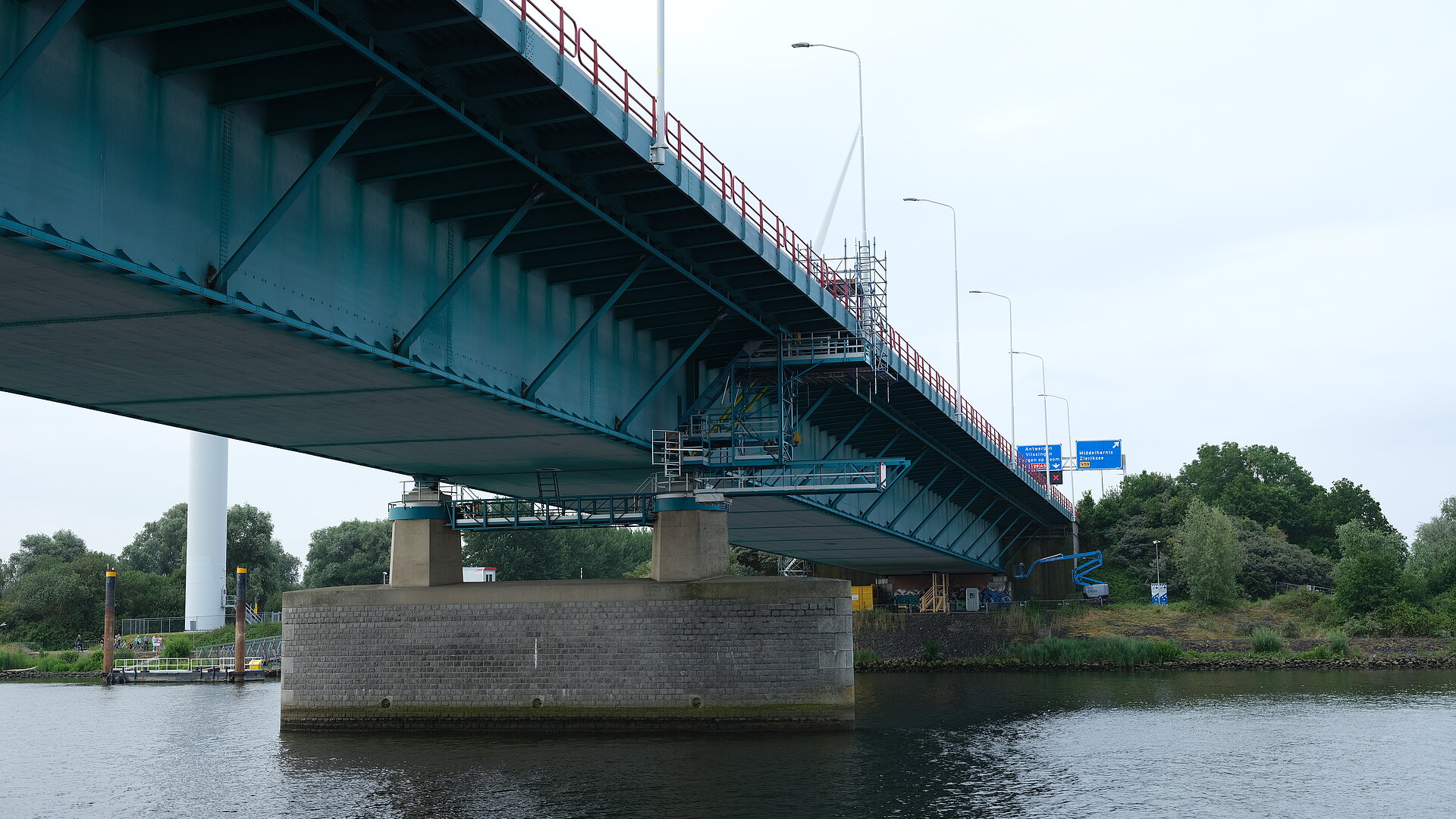
As bridges across the Netherlands reach the end of their original service life, reliable insight into their actual condition becomes increasingly important. Inspection and NDT can support informed decisions about maintenance, repair and life extension.
Bridges are essential links in the Dutch infrastructure network. According to Rijkswaterstaat, many bridges, tunnels, locks and roads dating from the 1950s and 1960s are reaching the end of their service life and require renewal or renovation. Rijkswaterstaat has therefore outlined a major renewal programme for the coming years. [open.rijks...erstaat.nl], [rijkswaterstaat.nl]
At the same time, renewal does not automatically mean replacement. Rijkswaterstaat explicitly considers where life-extending measures can be applied and where replacement is necessary. [rijkswaterstaat.nl]
This makes reliable information about the actual condition of a structure increasingly important. Before decisions can be made about maintenance, repair, life extension or replacement, it is essential to understand what is happening within the structure.

Regular inspection and Non-Destructive Testing (NDT) can provide valuable insight into the condition of steel structures without unnecessarily damaging them.
At MME Group, we combine decades of experience in inspection and NDT with conventional and advanced testing techniques. Depending on the structure and inspection requirements, methods such as Eddy Current Testing, Magnetic Testing, conventional Ultrasonic Testing, TOFD and Phased Array Ultrasonic Testing can be applied. For difficult-to-access areas, NDT can also be combined with Rope Access.
Understanding the condition of a bridge provides important information for determining the appropriate next steps. Inspection results provide valuable information when assessing whether further investigation, monitoring, maintenance or repair is required.
This is particularly relevant when considering how the safe service life of an existing structure can be extended.
For MME Group, this principle lies at the heart of what we do: A Longer Life.
By identifying signs of wear or damage and monitoring their development, inspection and NDT can support safe and informed maintenance decisions and help make the best possible use of existing assets.
Inspecting infrastructure can present an additional challenge: roads and bridges often need to remain available while the inspection is being performed.
Depending on the structure and inspection requirements, advanced NDT techniques and Rope Access can provide opportunities to carry out inspections with limited impact on the surrounding environment and infrastructure.
For example, Phased Array Ultrasonic Testing (PAUT) can in certain applications be performed from the underside of a bridge deck. This can eliminate the need to remove the road surface for the inspection and can help reduce disruption to traffic.
MME Group provides a multidisciplinary approach to the inspection of civil structures. Our capabilities include conventional and advanced NDT, Rope Access and laboratory testing.
This combination brings multiple disciplines together within one organisation, from on-site inspection and advanced NDT to further material analysis where required.
Would you like to learn more about the specific NDT methods that can be used for bridge inspections?
Read our earlier article: Bridge inspection with NDT: Maximum certainty without disruption
Whether you are planning maintenance, investigating the condition of a structure or looking for a suitable inspection method, MME Group can help determine an appropriate inspection approach.
Contact our specialists to discuss the possibilities for your bridge or civil structure via the contactform below.
Sources